Many Minds, One Voice: 11 Sci-Fi Novels of Hive Minds and Collective Consciousness
Swarms that think, ships that speak through hundreds of bodies, and copies of a single self. Eleven sci-fi novels explore minds that are plural by design, and ask what individuality is really worth.
Facebook
Twitter
WhatsApp
Email
Blood Music
by Greg Bear
A maverick biotechnologist smuggles out of his lab a set of intelligent cells he has engineered, injecting them into his own body to save his work. What begins as a private experiment starts to rewrite him from within, then spreads beyond anyone’s control. Bear’s inventive, unsettling novel pushes biotechnology towards transcendence and horror, questioning what it means to be an individual.
Goodreads: 3.84
Rated 3.84 out of 5
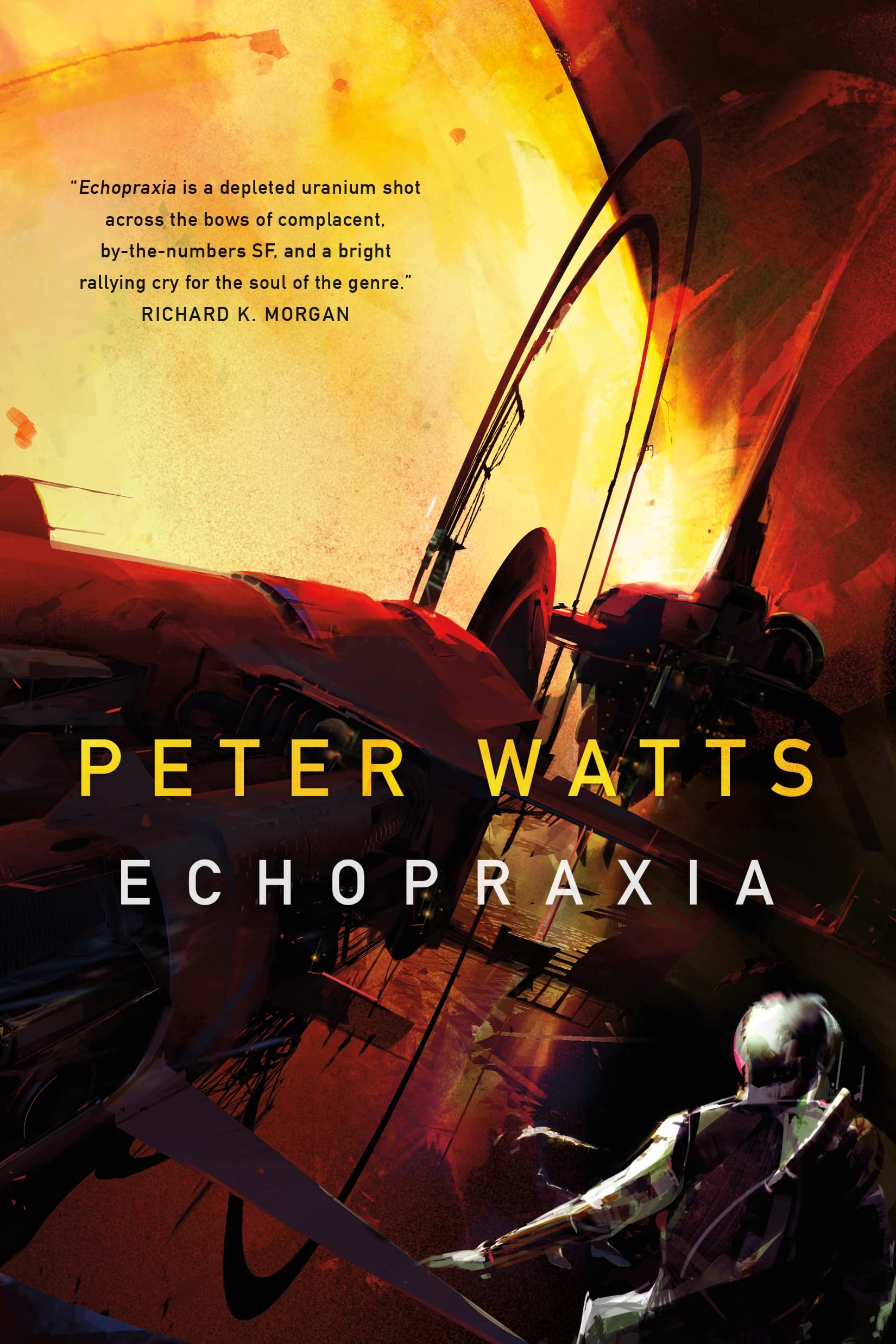
Echopraxia
by Peter Watts
Firefall
(Book 2)
A biologist who prefers solitude is pulled into a deep-space voyage alongside a monastic order of enhanced humans who act and perceive as one. Their shared awareness seems to move ahead of ordinary reasoning, leaving the narrator bewildered about free will and thought itself. It is dense, bleak and thrilling hard science fiction that treats group cognition as both a marvel and a menace.
Goodreads: 3.82
Rated 3.82 out of 5
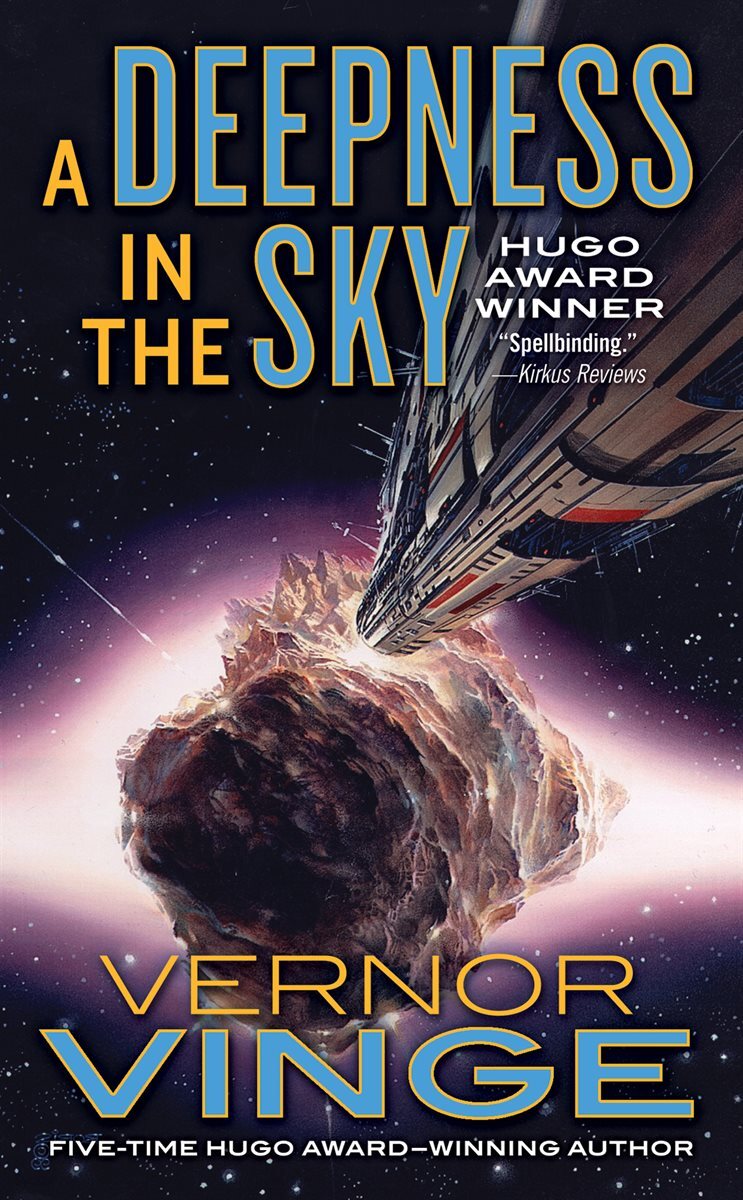
A Deepness in the Sky
by Vernor Vinge
Zones of Thought
(Book 2)
Two human fleets converge on a distant star that blinks on and off, orbited by a planet of spider-like beings just approaching the age of technology. As rival expeditions watch from orbit, loyalty, trade and manipulation collide. Vinge builds a convincing alien society and a chilling tale of how minds can be controlled. It works well as a standalone read.
Goodreads: 4.32
Rated 4.32 out of 5
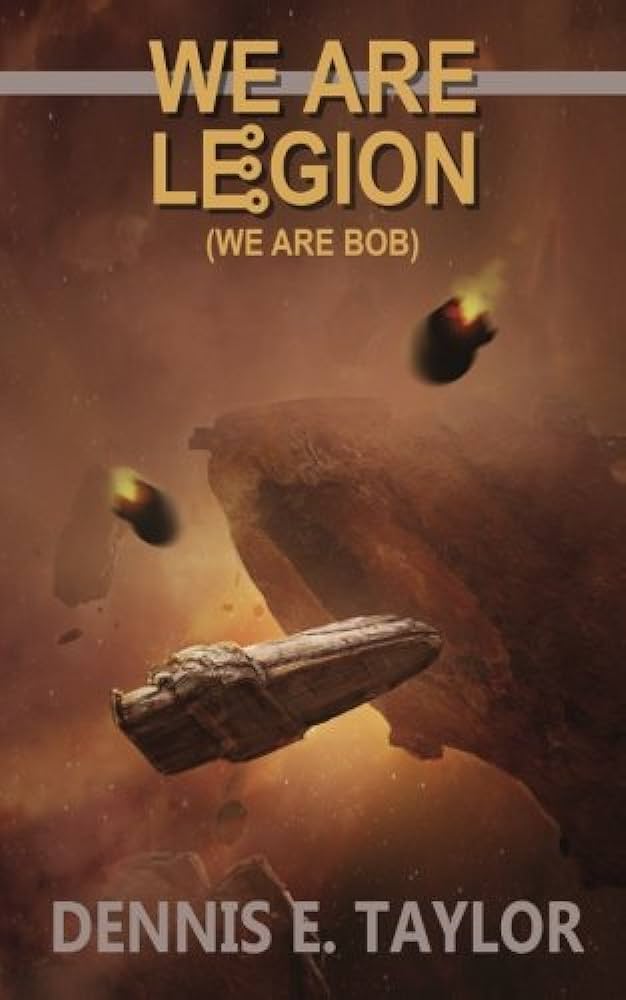
We Are Legion (We Are Bob)
by Dennis E. Taylor
Bobiverse
(Book 1)
Bob Johansson has just sold his software company and is looking forward to a life of leisure. There are places to go, books to read, and movies to watch. So it’s a little unfair when he gets himself killed crossing the street.
Bob wakes up a century later to find that corpsicles have been declared to be without rights, and he is now the property of the state. He has been uploaded into computer hardware and is slated to be the controlling AI in an interstellar probe looking for habitable planets. The stakes are high: no less than the first claim to entire worlds. If he declines the honor, he’ll be switched off, and they’ll try again with someone else. If he accepts, he becomes a prime target. There are at least three other countries trying to get their own probes launched first, and they play dirty.
The safest place for Bob is in space, heading away from Earth at top speed. Or so he thinks. Because the universe is full of nasties, and trespassers make them mad – very mad.
Goodreads: 4.23
Rated 4.23 out of 5
Ender’s Game
by Orson Scott Card
Orson Scott Card
(Book 1)
Andrew “Ender” Wiggin thinks he is playing computer simulated war games; he is, in fact, engaged in something far more desperate. The result of genetic experimentation, Ender may be the military genius Earth desperately needs in a war against an alien enemy seeking to destroy all human life. The only way to find out is to throw Ender into ever harsher training, to chip away and find the diamond inside, or destroy him utterly. Ender Wiggin is six years old when it begins. He will grow up fast.
But Ender is not the only result of the experiment. The war with the Buggers has been raging for a hundred years, and the quest for the perfect general has been underway almost as long. Ender’s two older siblings, Peter and Valentine, are every bit as unusual as he is, but in very different ways. While Peter was too uncontrollably violent, Valentine very nearly lacks the capability for violence altogether. Neither was found suitable for the military’s purpose. But they are driven by their jealousy of Ender, and by their inbred drive for power. Peter seeks to control the political process, to become a ruler. Valentine’s abilities turn more toward the subtle control of the beliefs of commoner and elite alike, through powerfully convincing essays. Hiding their youth and identities behind the anonymity of the computer networks, these two begin working together to shape the destiny of Earth-an Earth that has no future at all if their brother Ender fails.
Goodreads: 4.31
Rated 4.31 out of 5
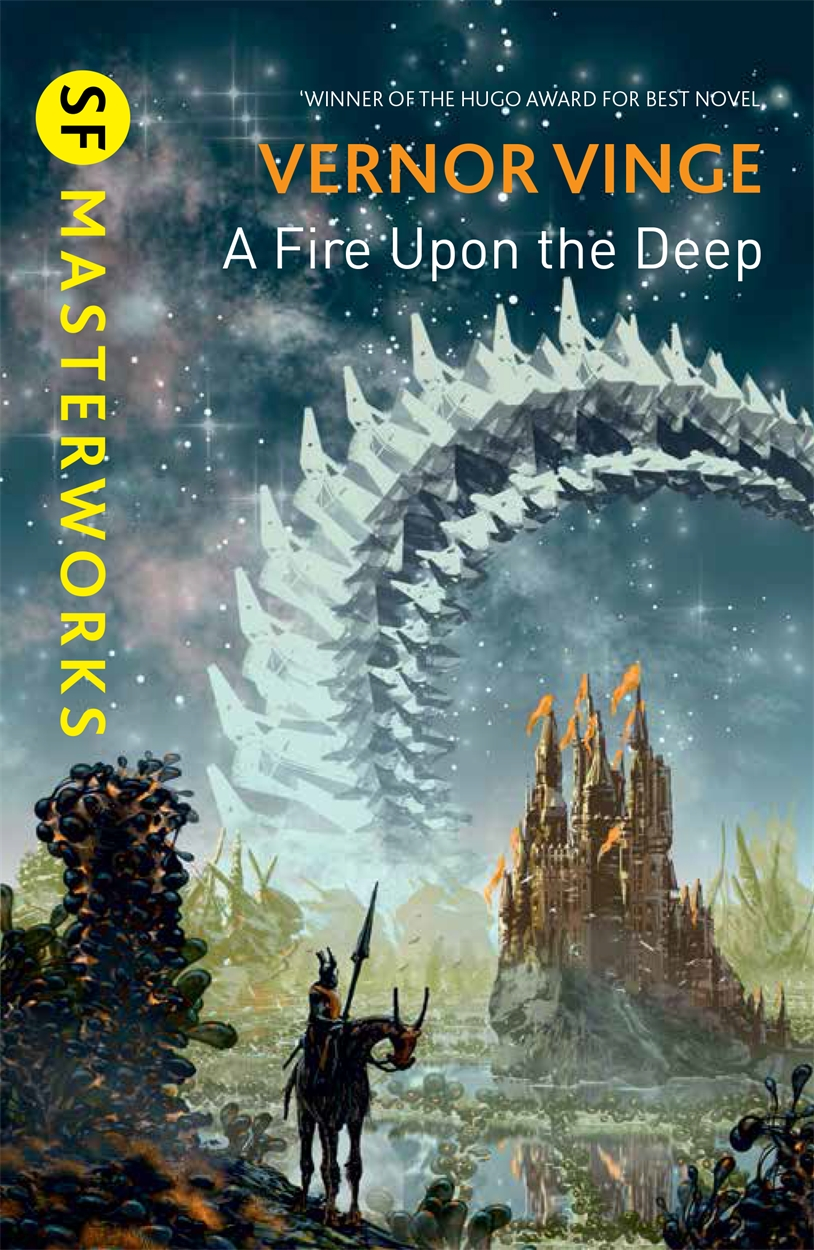
A Fire Upon the Deep
by Vernor Vinge
Zones of Thought
(Book 1)
A Fire upon the Deep is the big, breakout book that fulfills the promise of Vinge’s career to date: a gripping tale of galactic war told on a cosmic scale.
Thousands of years hence, many races inhabit a universe where a mind’s potential is determined by its location in space, from superintelligent entities in the Transcend, to the limited minds of the Unthinking Depths, where only simple creatures and technology can function. Nobody knows what strange force partitioned space into these “regions of thought,” but when the warring Straumli realm use an ancient Transcendent artifact as a weapon, they unwittingly unleash an awesome power that destroys thousands of worlds and enslaves all natural and artificial intelligence.
Fleeing the threat, a family of scientists, including two children, are taken captive by the Tines, an alien race with a harsh medieval culture, and used as pawns in a ruthless power struggle. A rescue mission, not entirely composed of humans, must rescue the children-and a secret that may save the rest of interstellar civilization.
Goodreads: 4.13
Rated 4.13 out of 5
Ancillary Justice
by Ann Leckie
Imperial Radch
(Book 1)
On a remote, icy planet, the soldier known as Breq is drawing closer to completing her quest.
Once, she was the Justice of Toren – a colossal starship with an artificial intelligence linking thousands of soldiers in the service of the Radch, the empire that conquered the galaxy.
Now, an act of treachery has ripped it all away, leaving her with one fragile human body, unanswered questions, and a burning desire for vengeance.
Goodreads: 3.99
Rated 3.99 out of 5
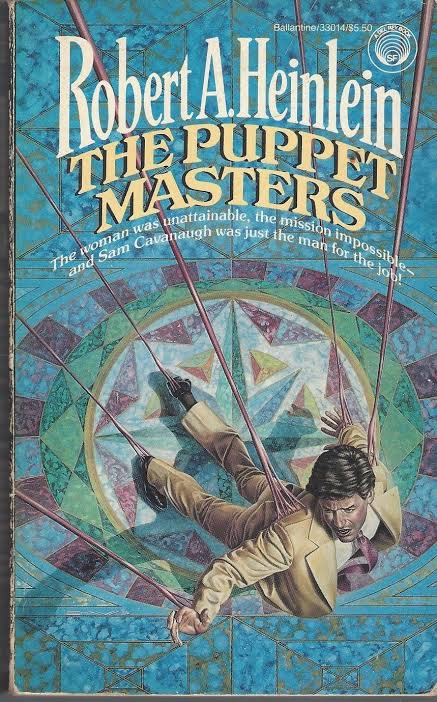
The Puppet Masters
by Robert A. Heinlein
A flying saucer lands quietly in Iowa, and soon people across America are behaving strangely. A secret government agency investigates and discovers that slug-like parasites are attaching themselves to human backs and taking control. Narrated by a hard-boiled agent, this Cold War thriller mixes paranoia, pulpy action and surprisingly sharp ideas about freedom, conformity and how a society might discover it is already compromised.
Goodreads: 3.88
Rated 3.88 out of 5
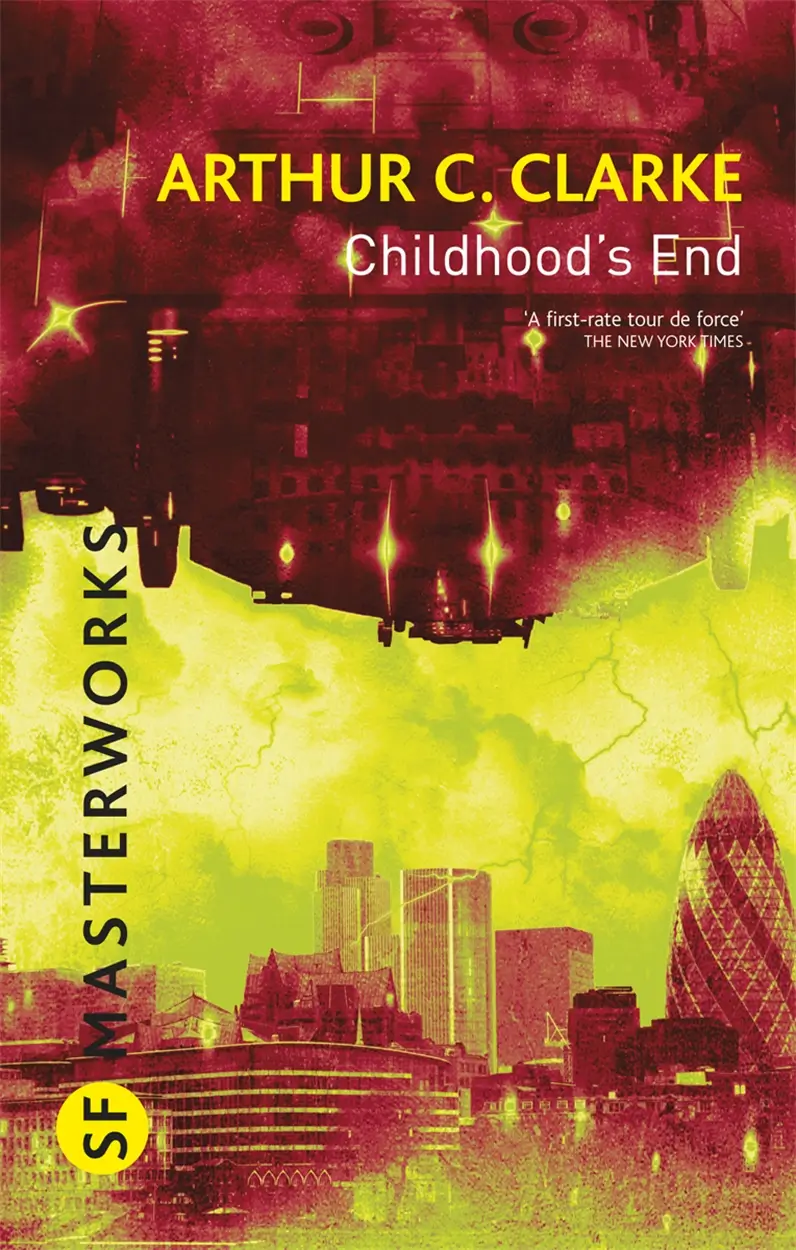
Childhood’s End
by Arthur C. Clarke
The Overlords appeared suddenly over every city—intellectually, technologically, and militarily superior to humankind. Benevolent, they made few demands: unify earth, eliminate poverty, and end war. With little rebellion, humankind agreed, and a golden age began.
But at what cost? With the advent of peace, man ceases to strive for creative greatness, and a malaise settles over the human race. To those who resist, it becomes evident that the Overlords have an agenda of their own. As civilization approaches the crossroads, will the Overlords spell the end for humankind . . . or the beginning?
Goodreads: 4.12
Rated 4.12 out of 5
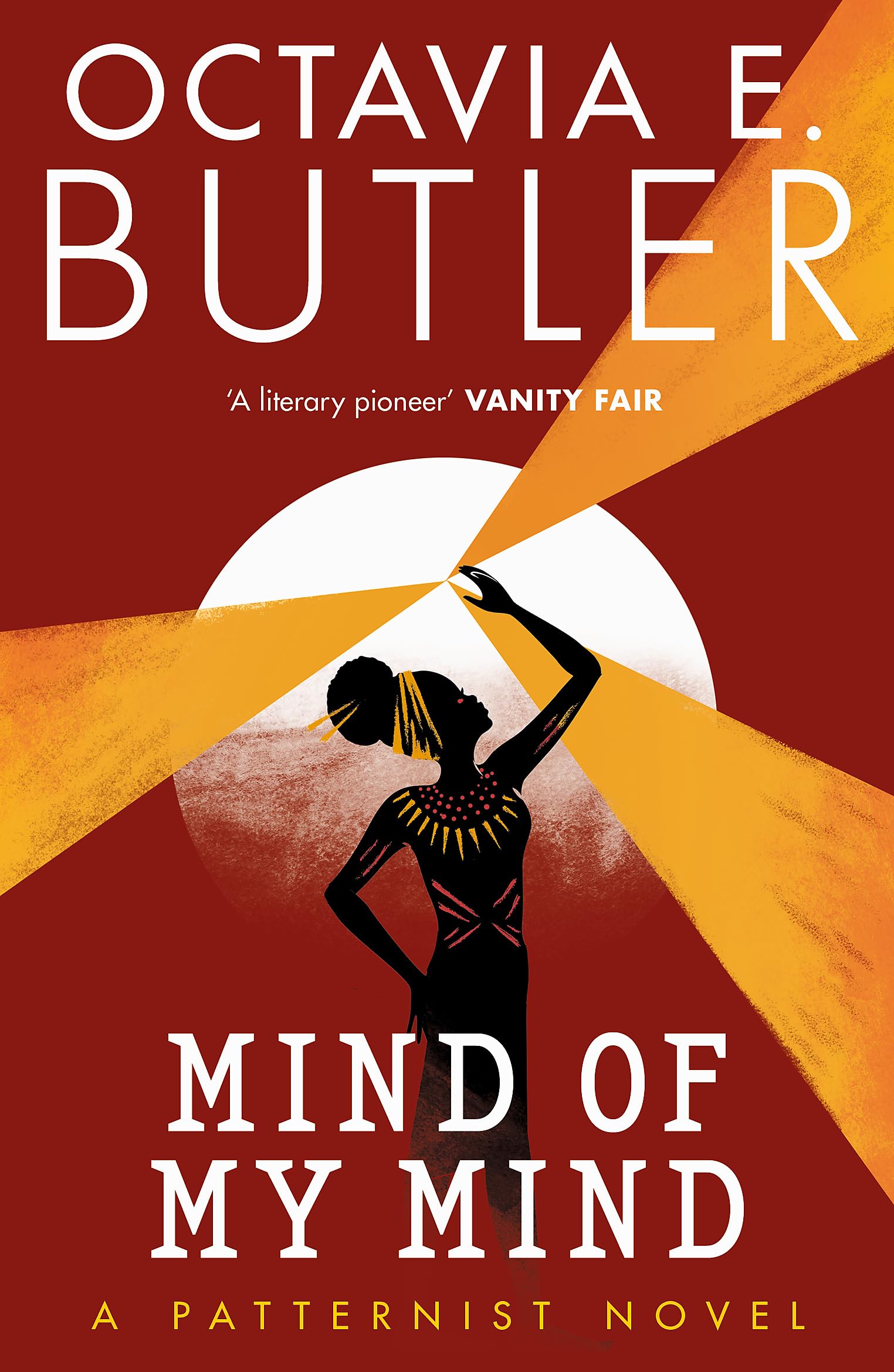
Mind of My Mind
by Octavia E. Butler
Patternist
(Book 2)
Mary is a young woman whose telepathic gift is overwhelming her, and she belongs to a long-lived manipulator’s breeding scheme for powerful minds. Rather than remain a pawn, she begins linking other telepaths into a single network that she can draw strength from and answer to. Butler examines the price of power, the pull of belonging and the way a community can turn into a single organism.
Goodreads: 4.19
Rated 4.19 out of 5
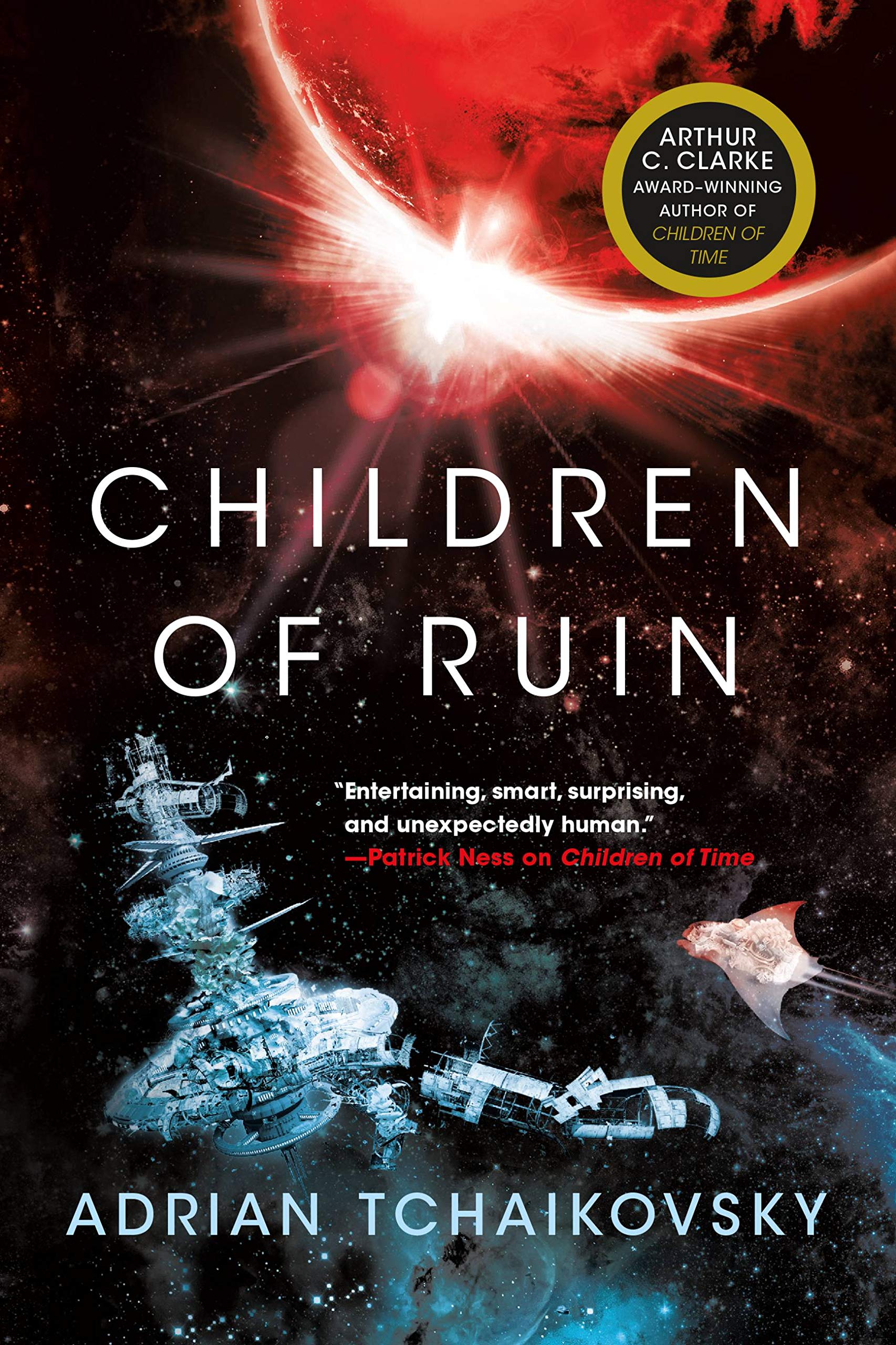
Children of Ruin
by Adrian Tchaikovsky
Children of Time
(Book 2)
Generations after the events of the first book, humans and their spider allies find a distant planet where an earlier terraforming experiment went strangely wrong. Beneath the waves lives an alien intelligence with a body and mind spread across many arms, thinking in ways no one expected. Contact is tense and unsettling, and the novel keeps asking what counts as a single mind, and what it means to understand one.