Galaxy-Sized Reads: 9 Sci-Fi Doorstoppers to Lose Yourself In
Some universes need room to breathe. These nine mighty sci-fi tomes offer vast casts, centuries of history and ideas on a grand scale, perfect for readers who want a story to live in for weeks rather than days.
Facebook
Twitter
WhatsApp
Email
Death’s End
by Liu Cixin
Remembrance of Earth’s Past
(Book 3)
Half a century after the Doomsday Battle, the uneasy balance of Dark Forest Deterrence keeps the Trisolaran invaders at bay. Earth enjoys unprecedented prosperity due to the infusion of Trisolaran knowledge. With human science advancing daily and the Trisolarans adopting Earth culture, it seems that the two civilizations will soon be able to co-exist peacefully as equals without the terrible threat of mutually assured annihilation. But the peace has also made humanity complacent.
Cheng Xin, an aerospace engineer from the early 21st century, awakens from hibernation in this new age. She brings with her knowledge of a long-forgotten program dating from the beginning of the Trisolar Crisis, and her very presence may upset the delicate balance between two worlds. Will humanity reach for the stars or die in its cradle?
Goodreads: 4.40
Rated 4.4 out of 5
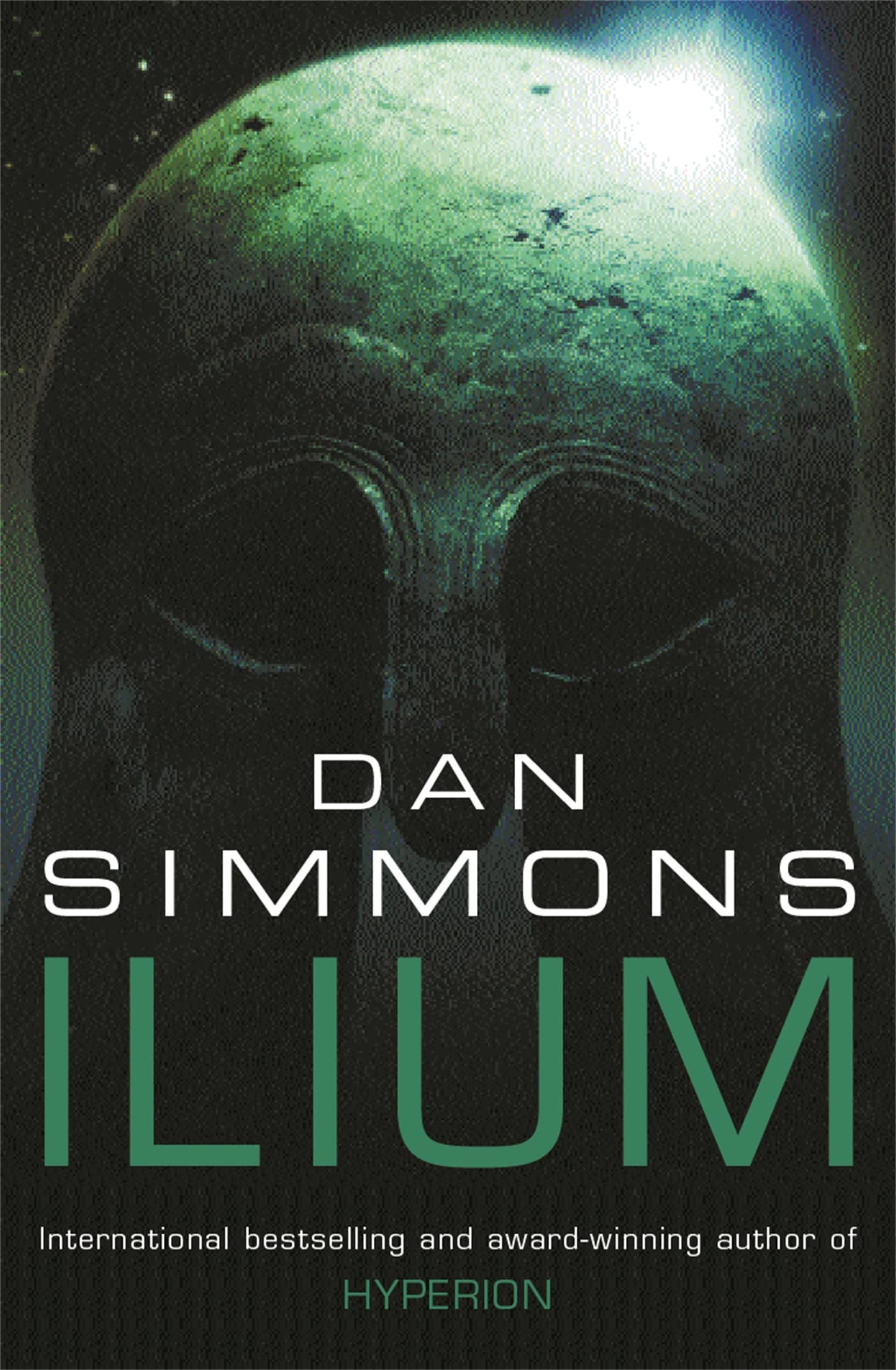
Ilium
by Dan Simmons
Ilium/Olympos
(Book 1)
On a terraformed Mars, godlike beings re-enact the Trojan War while a scholar from the far future is pressed into spying on the action. Elsewhere, sentient moravec machines head for the outer planets, and a scattered human population drifts through leisurely lives. Simmons weaves Homer, Shakespeare and hard science into an ambitious, multi-strand epic that demands time and attention.
Goodreads: 4.04
Rated 4.04 out of 5
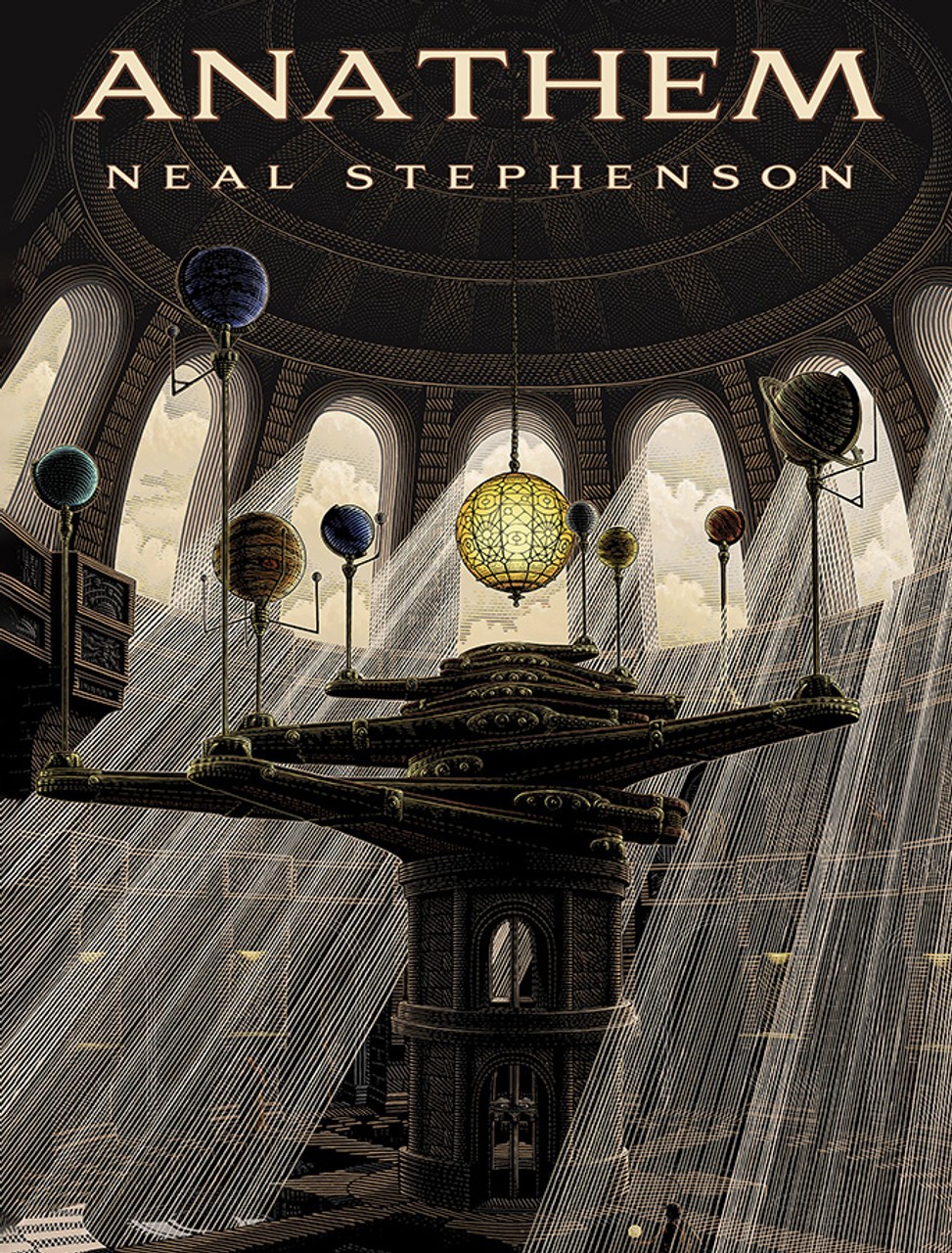
Anathem
by Neal Stephenson
Fraa Erasmas is a young avout living in the Concent of Saunt Edhar, a sanctuary for mathematicians, scientists, and philosophers, protected from the corrupting influences of the outside “saecular” world by ancient stone, honored traditions, and complex rituals. Over the centuries, cities and governments have risen and fallen beyond the concent’s walls.
Three times during history’s darkest epochs violence born of superstition and ignorance has invaded and devastated the cloistered mathic community. Yet the avout have always managed to adapt in the wake of catastrophe, becoming out of necessity even more austere and less dependent on technology and material things. And Erasmas has no fear of the outside—the Extramuros—for the last of the terrible times was long, long ago.
Now, in celebration of the week-long, once-in-a-decade rite of Apert, the fraas and suurs prepare to venture beyond the concent’s gates—at the same time opening them wide to welcome the curious “extras” in. During his first Apert as a fraa, Erasmas eagerly anticipates reconnecting with the landmarks and family he hasn’t seen since he was “collected.” But before the week is out, both the existence he abandoned and the one he embraced will stand poised on the brink of cataclysmic change.
Goodreads: 4.17
Rated 4.17 out of 5
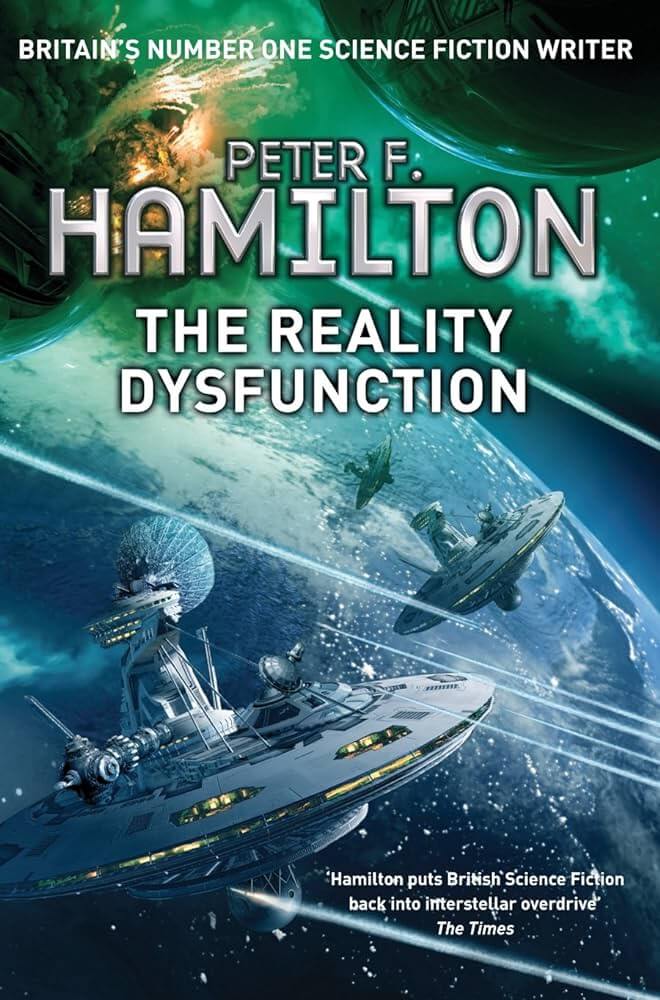
The Reality Dysfunction
by Peter F. Hamilton
Night’s Dawn Trilogy
(Book 1)
In AD 2600 the human race is finally beginning to realize its full potential. Hundreds of colonized planets scattered across the galaxy host a multitude of prosperous and wildly diverse cultures. Genetic engineering has pushed evolution far beyond nature’s boundaries, defeating disease and producing extraordinary spaceborn creatures. Huge fleets of sentient trader starships thrive on the wealth created by the industrialization of entire star systems. And throughout inhabited space the Confederation Navy keeps the peace. A true golden age is within our grasp.
But now something has gone catastrophically wrong. On a primitive colony planet a renegade criminal’s chance encounter with an utterly alien entity unleashes the most primal of all our fears. An extinct race which inhabited the galaxy aeons ago called it “The Reality Dysfunction.” It is the nightmare which has prowled beside us since the beginning of history.
Goodreads: 4.13
Rated 4.13 out of 5
Dune
by Frank Herbert
Dune
(Book 1)
Set on the desert planet Arrakis, Dune is the story of the boy Paul Atreides, heir to a noble family tasked with ruling an inhospitable world where the only thing of value is the “spice” melange, a drug capable of extending life and enhancing consciousness. Coveted across the known universe, melange is a prize worth killing for…
When House Atreides is betrayed, the destruction of Paul’s family will set the boy on a journey toward a destiny greater than he could ever have imagined. And as he evolves into the mysterious man known as Muad’Dib, he will bring to fruition humankind’s most ancient and unattainable dream.
Goodreads: 4.29
Rated 4.29 out of 5
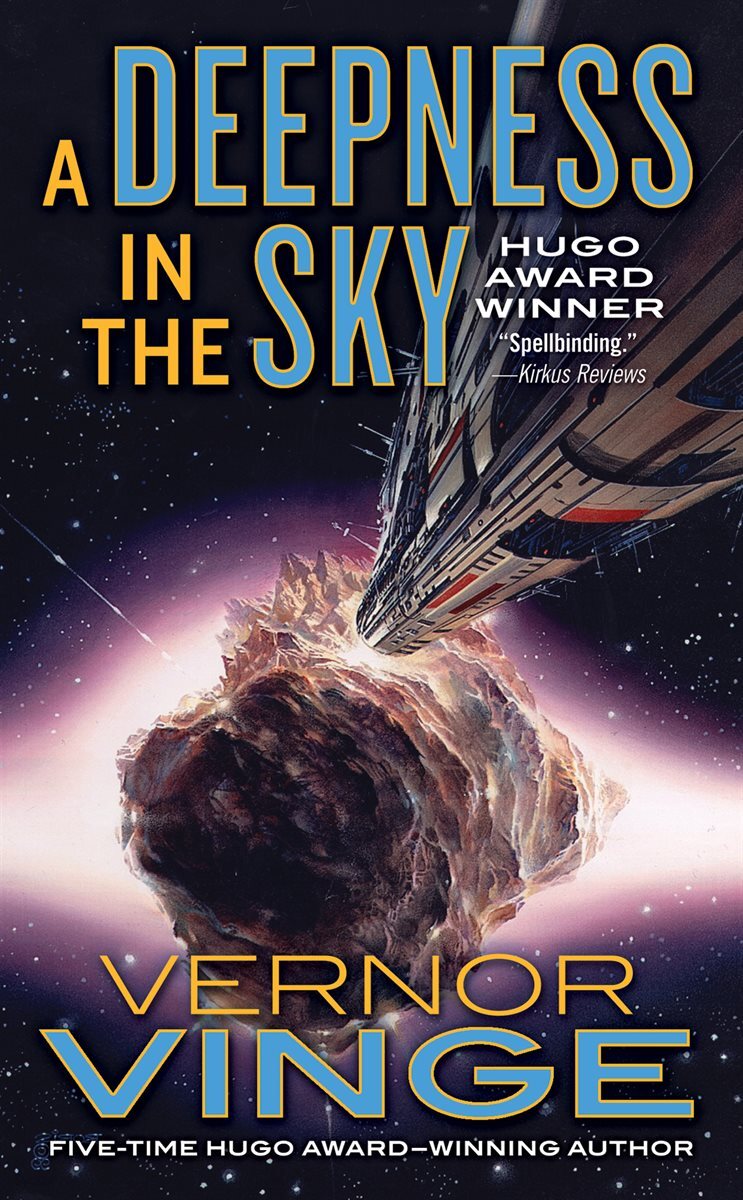
A Deepness in the Sky
by Vernor Vinge
Zones of Thought
(Book 2)
Two human fleets converge on a distant star that blinks on and off, orbited by a planet of spider-like beings just approaching the age of technology. As rival expeditions watch from orbit, loyalty, trade and manipulation collide. Vinge builds a convincing alien society and a chilling tale of how minds can be controlled. It works well as a standalone read.
Goodreads: 4.32
Rated 4.32 out of 5
Pandora’s Star
by Peter F. Hamilton
Commonwealth Saga
(Book 1)
The year is 2380. The Intersolar Commonwealth, a sphere of stars some four hundred light-years in diameter, contains more than six hundred worlds, interconnected by a web of transport “tunnels” known as wormholes. At the farthest edge of the Commonwealth, astronomer Dudley Bose observes the impossible: Over one thousand light-years away, a star… vanishes. It does not go supernova. It does not collapse into a black hole. It simply disappears. Since the location is too distant to reach by wormhole, a faster-than-light starship, the Second Chance, is dispatched to learn what has occurred and whether it represents a threat. In command is Wilson Kime, a five-time rejuvenated ex-NASA pilot whose glory days are centuries behind him.
Opposed to the mission are the Guardians of Selfhood, a cult that believes the human race is being manipulated by an alien entity they call the Starflyer. Bradley Johansson, leader of the Guardians, warns of sabotage, fearing the Starflyer means to use the starship’s mission for its own ends.
Pursued by a Commonwealth special agent convinced the Guardians are crazy but dangerous, Johansson flees. But the danger is not averted. Aboard the Second Chance, Kime wonders if his crew has been infiltrated. Soon enough, he will have other worries. A thousand light-years away, something truly incredible is waiting: a deadly discovery whose unleashing will threaten to destroy the Commonwealth… and humanity itself. Could it be that Johansson was right?
Goodreads: 4.22
Rated 4.22 out of 5
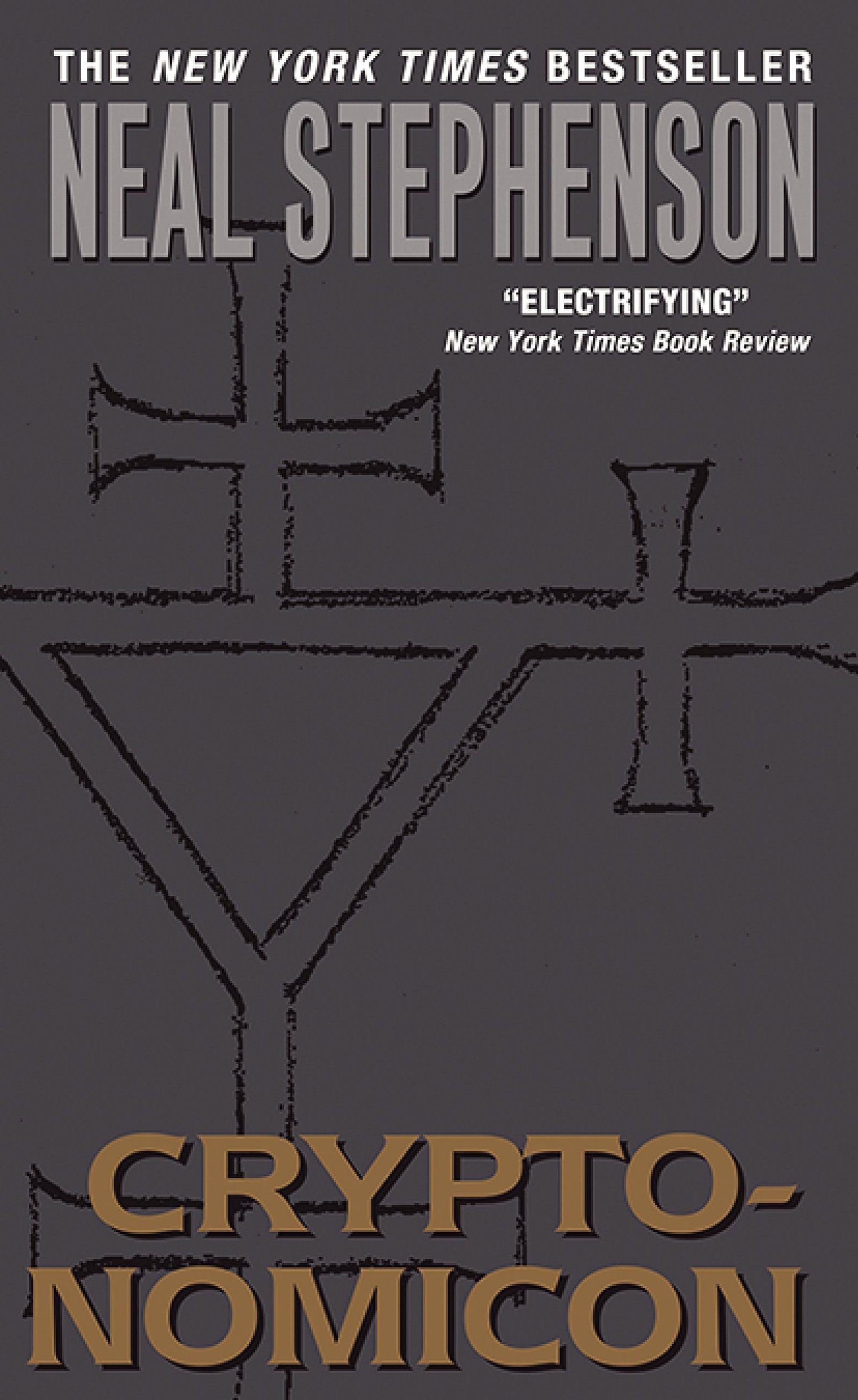
Cryptonomicon
by Neal Stephenson
Cryptonomicon
(Book 1)
Two timelines intertwine: a group of codebreakers and misfit soldiers fighting the Second World War, and their descendants chasing an ambitious data haven in the late 1990s. Stephenson mixes mathematics, cryptography, treasure-hunting and sharp humour across more than nine hundred pages. It is dense, funny and endlessly digressive, ideal for readers who like their technology stories long and intellectually rich.
Goodreads: 4.23
Rated 4.23 out of 5
Seveneves
by Neal Stephenson
What would happen if the world were ending?
A catastrophic event renders the earth a ticking time bomb. In a feverish race against the inevitable, nations around the globe band together to devise an ambitious plan to ensure the survival of humanity far beyond our atmosphere, in outer space.
But the complexities and unpredictability of human nature coupled with unforeseen challenges and dangers threaten the intrepid pioneers, until only a handful of survivors remain . . .
Five thousand years later, their progeny—seven distinct races now three billion strong—embark on yet another audacious journey into the unknown . . . to an alien world utterly transformed by cataclysm and time: Earth.